Aug 26 2026
Bridging Perspectives: Why I’m Coming Back With Greater Hope
h in Blogs
By Tammy Anderson, Executive Director
Last year, as I flew into Boston for the inaugural Bridging Perspectives Convening, I looked over at my daughter and thought about everything that had happened since narcolepsy entered her life ten years earlier.
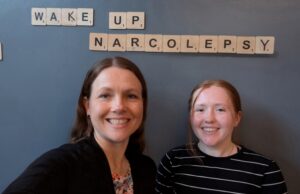
I thought about how much this disorder has changed her life. The challenges. The burden. The things she carries that most people will never see or fully understand. And then I thought about something else: the hardest thing in her life has also brought some of the most meaningful experiences into it.
Bridging Perspectives was one of them.
There is something difficult to put into words about watching my daughter walk into a room filled with people who understand. People living with narcolepsy. Family members. Advocates. Researchers. Clinicians. Experts who have spent years studying the disorder.
The connection was immediate.
She didn’t have to explain herself. She didn’t have to convince anyone that what she experiences is real. She could simply be herself. And perhaps even more meaningful, she had the opportunity to sit among leading experts in the field as an equal participant in the conversation. She was seen. She was heard. Her experience mattered.
I watched her confidence grow over the course of that event, and I was reminded why bringing different perspectives together is so important.
A conversation that needed to continue
The inaugural Bridging Perspectives event did something important: it brought the patient experience into the same room as the people working to better understand and treat narcolepsy.
And it also made some gaps very clear.
We heard about the need for more provider education. We heard about the challenges patients face in finding knowledgeable care and support. We heard how important it is for clinicians to understand not only the science of narcolepsy, but what it actually means to live with it. Perhaps most importantly, we heard that patients want to be part of that education. They don’t want to be talked about in a room full of providers. They want to sit alongside them.
They want to share what it is like to live with narcolepsy. They want to hear how providers think about treatment and care. They want to understand the decisions being made on their behalf—and have an opportunity to participate in those decisions. That is one of the things I am most excited about as we return to Bridging Perspectives this year.
The 2026 Convening has expanded to offer continuing medical education for providers, both in person and virtually. That is an important step forward because better care depends on better-informed clinicians, and better-informed clinicians need opportunities to learn directly from the people they are caring for.
This isn’t education happening about patients. It’s education happening with patients, and that distinction matters.
A field at an exciting turning point
There is also a sense of momentum around narcolepsy right now that is difficult to ignore.
We are seeing increased attention to the disorder, continuing clinical trials, new research, and, importantly, a new therapy that has just received FDA approval and will soon be available to physicians. That makes this year’s Convening particularly timely. We are incredibly fortunate to have Dr. Emmanuel Mignot joining us to share his expertise at a moment when the science of narcolepsy is moving forward in meaningful ways.
For anyone who has followed narcolepsy research, the opportunity to hear directly from Dr. Mignot is pretty remarkable. His work has fundamentally shaped our understanding of narcolepsy, and his contributions to the field have helped change the way we think about the disorder itself.
But what excites me most isn’t simply having a renowned expert on the agenda. It is having that expertise in the same room with the people who live with narcolepsy and the clinicians who are caring for them.
Because a new treatment is only the beginning of the conversation.
What does it mean for the patient sitting in front of a physician? How do we think about treatment options? How do we weigh benefits and challenges? How do patient preferences and priorities factor into those decisions? Patients need options. They also need opportunities to make informed choices about their own care.
Those are the conversations I hope will come out of this year’s event.
From new science to real-world decisions
The agenda for this year’s Bridging Perspectives Convening reflects just how much is happening in narcolepsy and sleep medicine. Orexin agonists will be an important part of the conversation, particularly as we begin thinking about what emerging therapies mean in actual clinical practice.
We’ll also explore comorbidities, oxybate therapies and wake-promoting agents—topics that are familiar to many people living with narcolepsy but can become complicated very quickly when you’re trying to determine what treatment approach is right for an individual patient.
And that is really the point. There is no one-size-fits-all approach to narcolepsy.
Two people can have the same diagnosis and have very different experiences, priorities, responses to treatment and definitions of what it means to be doing well. One person may be most concerned about excessive daytime sleepiness. Another may be struggling with disrupted nighttime sleep. Someone else may be trying to balance treatment with work, school, family responsibilities or other health conditions.
The best treatment isn’t simply the newest treatment. It’s the treatment that makes sense for that person. That is why patient choice and shared decision-making need to be part of the conversation.
Then, there’s AI…
One of the conversations I am especially curious about is the role of technology in sleep medicine.
AI is moving into healthcare at an incredible pace, and sleep medicine is no exception. There are exciting possibilities for using technology to support physicians and patients, but there are also important ethical questions we need to ask.
Where should AI help? Where should it not? How do we make sure technology supports the physician-patient relationship rather than getting in the way of it? And how do we make sure that all of the data and information available to patients and clinicians actually leads to better care?
These aren’t questions that can be answered by technology alone.
They require clinicians. They require patients. They require thoughtful conversations about ethics, trust and the role technology should play in healthcare. I am grateful that those conversations are part of Bridging Perspectives rather than being treated as something for the future.
The future is already here. We need to figure out how to use it well.
The people make this event
Of course, the agenda is exciting. The science is exciting. The new treatment possibilities are exciting. But if last year’s event taught me anything, it is that the people in the room are what make Bridging Perspectives special.
We have an extraordinary community of experts who genuinely want to talk with patients and, just as importantly, want to listen to them. That may sound like a small distinction, but it isn’t.
There is a difference between inviting patients to attend an event and creating an environment where their experiences are considered an essential part of the conversation. The experts joining us this year aren’t simply there to deliver presentations. They are there because they care about learning more about the people they serve and finding better ways to serve them.
That spirit is what makes me so excited to return.
Building on what we learned last year
One of the things I appreciate most about Bridging Perspectives is that we listened. Last year’s event identified gaps, and this year’s event is designed in part to address them.
The emphasis on provider education is stronger. The opportunity for clinicians to earn CME credit is new. And the programming is intentionally focused on helping providers better understand the experiences and needs of the narcolepsy community. Our support group leaders from WUN were an important part of last year’s event, and I am thrilled they will be joining us again. They bring something that can’t be learned from a textbook or presentation: an understanding of what it is like to navigate narcolepsy in real life.
This year, they will also have an opportunity to learn more about the physician education process and take that knowledge back to their communities. That creates another important bridge. We want patients and families to feel more comfortable coming to their providers with information, asking questions and advocating for the support they need.
And we want providers to feel better prepared to receive those questions, understand where their patients are coming from and work with them to make informed decisions.
That is what Bridging Perspectives is supposed to do — build bridges.
A reason for hope
There is still so much we don’t know about narcolepsy.
There are still people waiting years for a diagnosis. There are people who are misunderstood. There are patients struggling to find the right treatment and families trying to figure out what comes next. But there is also more attention on narcolepsy than we have seen in a long time.
There are continuing clinical trials. There are new treatment possibilities. There is growing interest from researchers, clinicians and the broader healthcare community. My hope is that this momentum will translate into greater awareness and, ultimately, reduce the time people spend waiting for answers. I also know that increased attention can bring its own challenges.
The narcolepsy community will have questions.
There will be decisions to make. There will be people trying to understand what a new treatment might mean for them, whether it is appropriate for their situation, how to access it and how to navigate the next step. We don’t pretend there will be one answer for everyone. What we can do is make sure no one has to navigate those questions alone.
Our team will be here. Our experienced peer support group leaders will be here. And the clinicians and experts participating in Bridging Perspectives will be here to share what they know—and, just as importantly, listen to what the community has to say.
Coming back with my daughter
This year, I will fly to Dallas with my daughter. Eleven years after narcolepsy changed the trajectory of her life, I find myself looking at her and thinking about how much has changed.
There have been hard years. There have been things she has had to carry that I wish she never had to carry. But there have also been people she would never have met, experiences she would never have had and a community that has given her a place to belong.
Last year, I watched her realize that she had a place in this conversation. This year, I am coming back with something I didn’t have quite as strongly last year: hope. Hope that new treatments will give people more options. Hope that better provider education will lead to better care. Hope that patients will increasingly be heard as partners in their own treatment decisions. Hope that the attention being paid to narcolepsy will help more people get diagnosed sooner. And hope that the next person who walks into a doctor’s office wondering what is happening to them will encounter someone who understands.
That, ultimately, is why I do this work. And why I am looking forward to Bridging Perspectives 2026. I hope you’ll join us.